
Eden Prairie & the West Metro
Garbage Disposal Installation
A disposal installation begins with the connected kitchen-sink setup. Tiger can review the sink, drain, and project context without assuming that every unit fits every home.
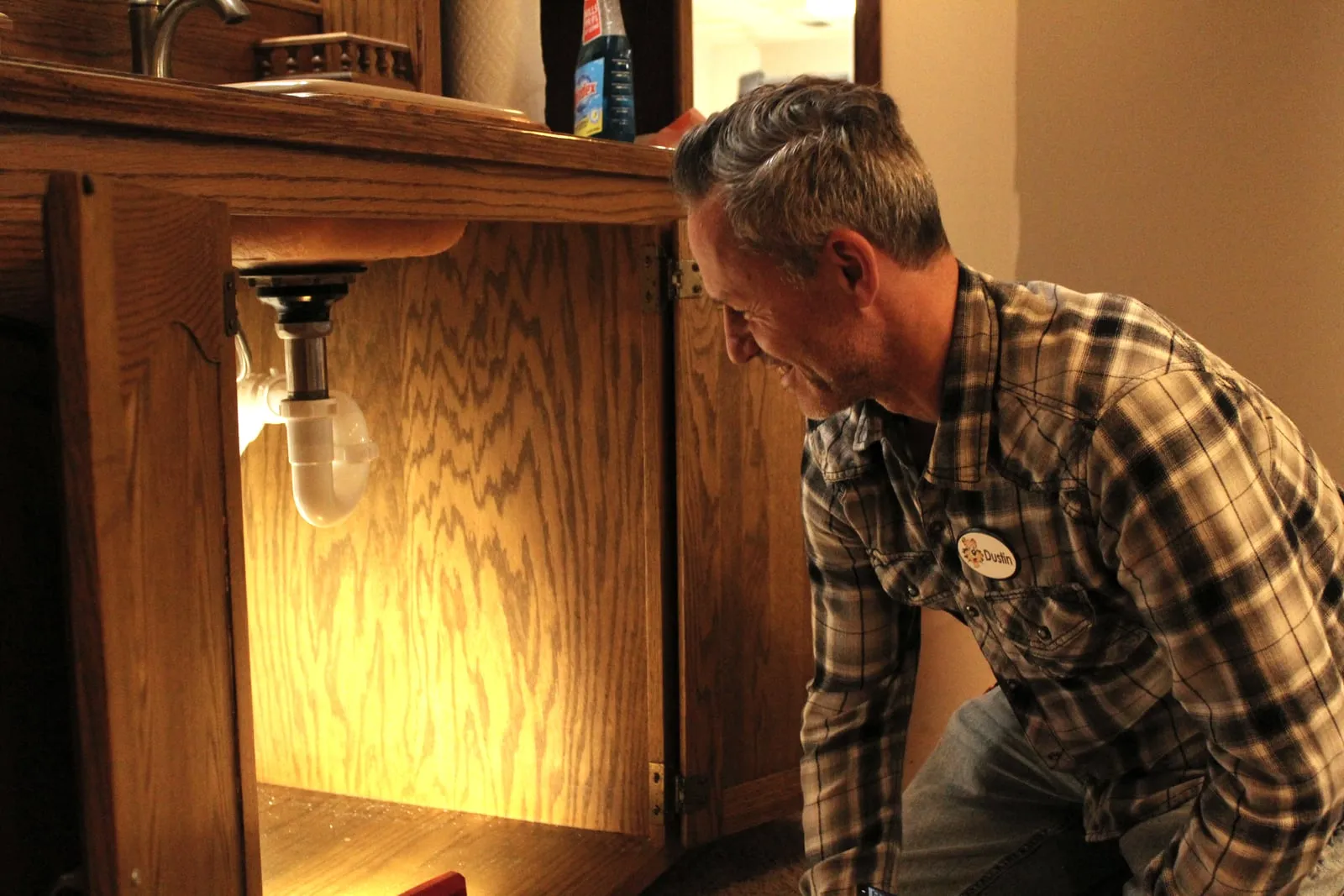
- Review the existing sink setup
- Discuss the planned installation
- Do not touch wiring or powered connections
Installation context
Begin with the sink—not a guessed fit.
A disposal is both Plumbing-connected and powered equipment. The actual setup needs to be understood before an installation is planned.
Sink
Begin with the existing sink setup.
The sink, drain, cabinet space, and current plumbing connections provide the context for a disposal installation conversation.
Project
Describe what you want installed.
Share whether equipment has already been selected and what you want the kitchen-sink project to accomplish without assuming that every unit fits every setup.
Boundary
Keep powered work in professional hands.
A disposal is powered equipment connected to plumbing. Do not open wiring, alter connections, or test compatibility as a homeowner preparation step.
Powered equipment
Stop use. Keep hands and tools out.
A disposal is not a place for a reach-in check, improvised tool, reset sequence, or wiring work.
- Do not put a hand, utensil, or tool into the disposal opening—even when the unit appears to be off.
- Do not operate switches, attempt a reset, open wiring, loosen plumbing connections, or continue using a unit that behaves differently.
- If there is smoke, sparking, a burning smell, or water near an electrical connection, leave the immediate area and call 911 if there is an active fire or immediate electrical danger.
After any immediate hazard is addressed, call Tiger and describe the disposal, the sink, and the change you noticed.
Helpful when you call
A few observations frame the visit.
No model research or troubleshooting sequence is required. If the label is not visible without reaching under or opening anything, leave it for the service visit.
- Which kitchen sink the installation is for
- Whether a disposal is already present, if readily visible
- Whether equipment has already been selected
- Whether water, smoke, sparking, or another immediate hazard is present
What happens next
Treat the disposal as part of a system.
The installation path depends on the current sink, drain, powered connection, and project context—not on a product description alone.
Describe the sink setup
Name the kitchen sink and the disposal-installation project you want to discuss.
Assess the connected system
The disposal belongs to a sink, drain, and powered setup. Those conditions need to be viewed together before an installation path is discussed.
Review the next step
Tiger can explain the installation path supported by the current setup so you can ask questions before deciding how to proceed.
Clear scope
The kitchen sink may point elsewhere.
A disposal concern can be separate from a slow drain, a faucet problem, or a supply-pipe leak. If you are unsure, describe where the change appears and Tiger can help start with the relevant service conversation.
Garbage disposal service
Call without reaching into the unit.
Tell Tiger which sink the installation is for and what is already in place.